
What Should You Do First If Your Home or Basement Floods?
Get everyone out of the water, stop the source if you can do it safely, take photos, and call a flood cleanup company the same day. Floodwater keeps soaking into drywall, insulation and subfloors for as long as it sits, and mold can start growing within 24 to 48 hours.
- Stay safe. Stay out of standing water if outlets, cords or appliances are under water. Turn off power at the breaker only if you can reach the panel without stepping in water.
- Stop the water. If a pipe burst or the water heater failed, close the main water shut-off valve.
- Move what you can. Carry small valuables, paperwork and electronics to a dry room.
- Document the damage. Photos and short videos of the water, the rooms and damaged items help your insurance claim. Take them before anything is moved.
- Avoid touching floodwater. Water from outside, a creek or a sewer line can carry bacteria and chemicals.
- Call a professional. Call (984) 205-1439 for water extraction and drying, and hold off on tearing out walls or floors until the damage has been checked.
Our Flood Damage Cleanup & Restoration Process in Raleigh
Flood damage cleanup means removing the water from a building, drying the structure back to normal moisture levels, cleaning and sanitizing what the water touched, and rebuilding what can’t be saved. Our IICRC-certified technicians handle all of it, so you don’t have to line up several contractors.
1. Inspection and Water Category
We find where the water came from, make sure the building is safe to enter, and map how far the moisture has spread with moisture meters and thermal imaging. We also classify the water. IICRC guidelines treat water from rising floods, creeks and sewer lines as Category 3, or “black water,” and that decides which materials have to come out.
2. Flood Water Extraction
Standing water comes out first, with truck-mounted and portable extractors and submersible pumps. How fast the bulk of the water is removed has more effect than anything else on how much flooring, drywall and furniture can be saved.
3. Removing Materials That Can’t Be Saved
Carpet and pad, soaked drywall and wet insulation that touched contaminated floodwater usually can’t be cleaned well enough to keep. We cut drywall above the water line so the inside of the wall can dry and be sanitized.
4. Structural Drying and Dehumidification
Moisture stays in framing, subfloors and concrete long after the floor looks dry. We set up commercial dehumidifiers and air movers and take moisture readings every day until each material is back to a normal level. Most homes take several days to dry, depending on how much water there was and what got wet.
5. Cleaning, Sanitizing and Odor Control
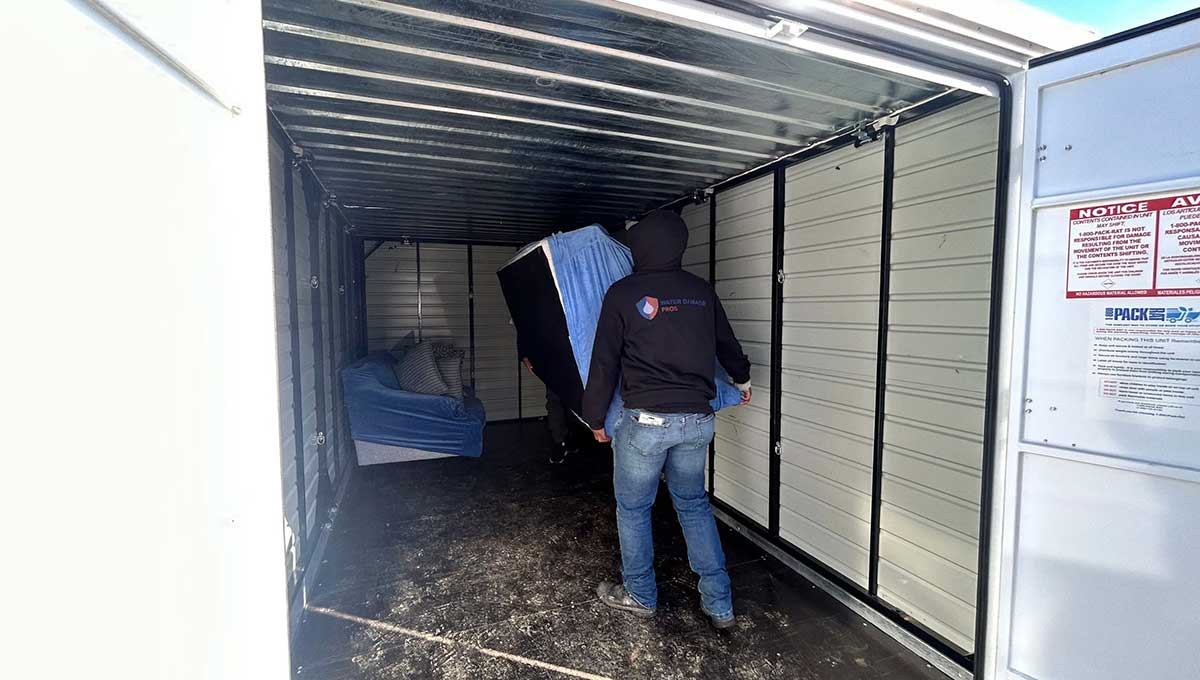
Every surface the water reached is cleaned and treated with antimicrobial products to help keep mold and bacteria from growing. Furniture and belongings that can be saved can be packed out, cleaned and stored while we work.
6. Repairs and Reconstruction
Once everything is dry, we replace drywall, insulation, flooring and trim and handle the reconstruction, so the home or business is put back the way it was before the flood.

Basement and Crawl Space Flood Cleanup
In Raleigh-area homes, flooding most often shows up in the basement or crawl space. Groundwater after heavy rain, a failed sump pump, a burst supply line or storm water running toward the foundation can all put water under the house. Left alone, it raises humidity in the whole home and leads to mold, musty odors and rotting floor joists. We pump out the water, pull wet insulation and debris, dry the space with dehumidifiers and check the floor framing for hidden moisture.
Flood Cleanup Services We Provide
- Emergency flood water extraction, 24/7
- Basement and crawl space flood cleanup
- Structural drying and dehumidification
- Cleaning, sanitizing and deodorizing
- Content pack-out and storage
- Mold remediation when flooding has already caused mold
- Sewage backup cleanup for contaminated water
- Repairs and reconstruction
- Insurance claim documentation
Commercial Flood Cleanup
For offices, stores and other business properties, we plan the cleanup around your operations to keep downtime short and keep unaffected areas open when it is safe. See our commercial water damage restoration page for more.


Flood Restoration in Raleigh: Insurance, Costs and Common Questions

Call 24/7
(984) 205-1439
Why Homes Flood in Raleigh
Raleigh gets strong summer thunderstorms and, in late summer and fall, the leftovers of tropical storms. Low areas near Crabtree Creek and Walnut Creek are known to flood during heavy rain, and homes nowhere near a creek still take on water through basements, crawl spaces, roofs and window wells. Inside the house, burst pipes in winter, failed water heaters and appliance supply lines cause just as many floods.
Is Flood Damage Covered by Insurance?
That depends on where the water came from. A standard homeowners policy generally does not cover rising water from outside. That needs a separate flood policy, for example through the National Flood Insurance Program. Sudden water damage from inside the home, such as a burst pipe, is often covered by a homeowners policy. We work with all insurance companies and can help you document and file your claim. Our records include photos, moisture readings and a log of the drying.
What Affects the Cost of Flood Restoration?
No two floods are the same, so we look at the damage before giving a price. The main factors are:
- the size of the area and how many rooms or floors are involved
- the water category: clean water from a supply line or contaminated floodwater and sewage
- how long the water sat before cleanup started
- the materials affected, such as carpet, hardwood, drywall, insulation and cabinets
- whether mold remediation or structural repairs are needed
Estimates are free, and starting quickly is the most reliable way to keep the cost down.
Health Risks of Floodwater
Floodwater can carry bacteria, sewage, fuel and chemicals, and wet building materials can grow mold within 24 to 48 hours. Children, older adults and anyone with asthma or allergies are at higher risk. Extraction, removal of contaminated materials, sanitizing and drying are what make the home safe to live in again.
Signs of Hidden Flood Damage
After the visible water is gone, keep an eye out for signs that moisture is still trapped in the structure:
- a musty or earthy smell that won’t go away
- soft, swollen or stained drywall and baseboards
- cupping or buckling in hardwood and laminate floors
- peeling paint or bubbling wallpaper
- damp air or condensation in the basement or crawl space
If you notice any of these after a flood, have the area checked with a moisture meter before mold has a chance to start.
Flood Damage vs. Water Damage
“Flood damage” usually means water that came in from outside, like rising water, storm runoff or an overflowing creek, and it is treated as contaminated. “Water damage” usually means water from a source inside the building, like a pipe or an appliance. The cleanup steps are similar, but floodwater means more material removal and sanitizing, and insurance often handles the two differently. For leaks and burst pipes, see our water damage restoration service.
Why Raleigh Homeowners Call Water Damage Pros NC
- 24/7 emergency response. We’re typically on site within about 60 minutes in the Raleigh area.
- IICRC-certified, fully licensed and insured.
- One team from extraction to rebuild: cleanup, drying, mold remediation and reconstruction.
- Help with insurance. We work with all insurance companies and can help you document and file your claim.
- Local company. Water Damage Pros NC has served the Raleigh area since 2021, led by owners with over a decade of restoration experience, with offices in Raleigh and Greensboro.
Flood Cleanup Near Raleigh
Outside Raleigh, we also handle flood cleanup in Cary, Holly Springs, Fuquay-Varina, Wake Forest, Rolesville and Youngsville. For roof leaks, fallen trees and wind damage, see our storm damage repair service.
Flood Cleanup FAQ
How quickly should flood damage be cleaned up?
Right away. Materials keep absorbing water every hour, and mold can begin to grow within 24 to 48 hours. Starting extraction and drying the same day usually saves more of the house and your belongings.
How long does it take to dry a house after a flood?
Usually several days. It depends on how much water there was, how long it sat, what materials got wet and the weather. We confirm with moisture readings that everything is dry before repairs begin.
Can carpet be saved after a flood?
Carpet soaked by clean water can sometimes be dried and cleaned. Carpet and pad soaked by floodwater from outside or by sewage are treated as contaminated and are usually thrown out.
Do I need to remove drywall after a flood?
Drywall that soaked up contaminated floodwater is normally cut out above the water line so the wall can dry and be sanitized. Drywall wet with clean water can sometimes be dried in place if it is handled quickly.
Can I stay in my home during flood cleanup?
It depends on how much of the house was affected and whether power, heat and bathrooms work. If contaminated water reached living areas, we will tell you which rooms to stay out of until cleaning and drying are finished.
Do you give free estimates for flood restoration?
Yes. Call (984) 205-1439 any time, day or night, and we will look at the damage and explain the next steps.