
What to Do Right After You Find Water Damage
Turn off the water, keep away from anything electrical that got wet, take photos and call for help. The first few hours matter most: water moves under flooring and into walls quickly, and wet materials can start to grow mold within 24 to 48 hours.
- Shut off the water. Close the main valve, or the valve under the sink, toilet or water heater that is leaking.
- Make it safe. If water reached outlets, cords or the electrical panel, don’t touch them. Turn off the breaker only if you can do it without standing in water.
- Take pictures. Photograph the source, the water on the floor, stained ceilings and anything damaged before cleanup starts.
- Move belongings. Lift furniture off wet carpet with blocks or foil under the legs, and move rugs, books and electronics out of the room.
- Call us. Call (984) 205-1439. We’ll ask a few questions about the source and the size of the area so the crew arrives with the right equipment.
Avoid using a household vacuum on standing water, and don’t cover wet drywall or floors with paint or new flooring. Trapped moisture is what leads to mold and rot later.
How Our Water Damage Restoration Works
Water damage restoration is the work of removing water from a building, drying the structure, cleaning affected areas and repairing what was damaged. The first part, stopping the damage and drying, is often called water mitigation. The second part is the repair. Our crew does both.
Step 1: Inspection and Moisture Mapping
We find and stop the source, then use moisture meters and thermal imaging to see where the water went. Water often travels farther than it looks: under hardwood, behind baseboards, into the floor below or across a ceiling.
Step 2: Water Extraction
We remove standing water and pull as much water as possible out of carpet and pad with professional extraction equipment. This step shortens drying time more than any other.
Step 3: Structural Drying
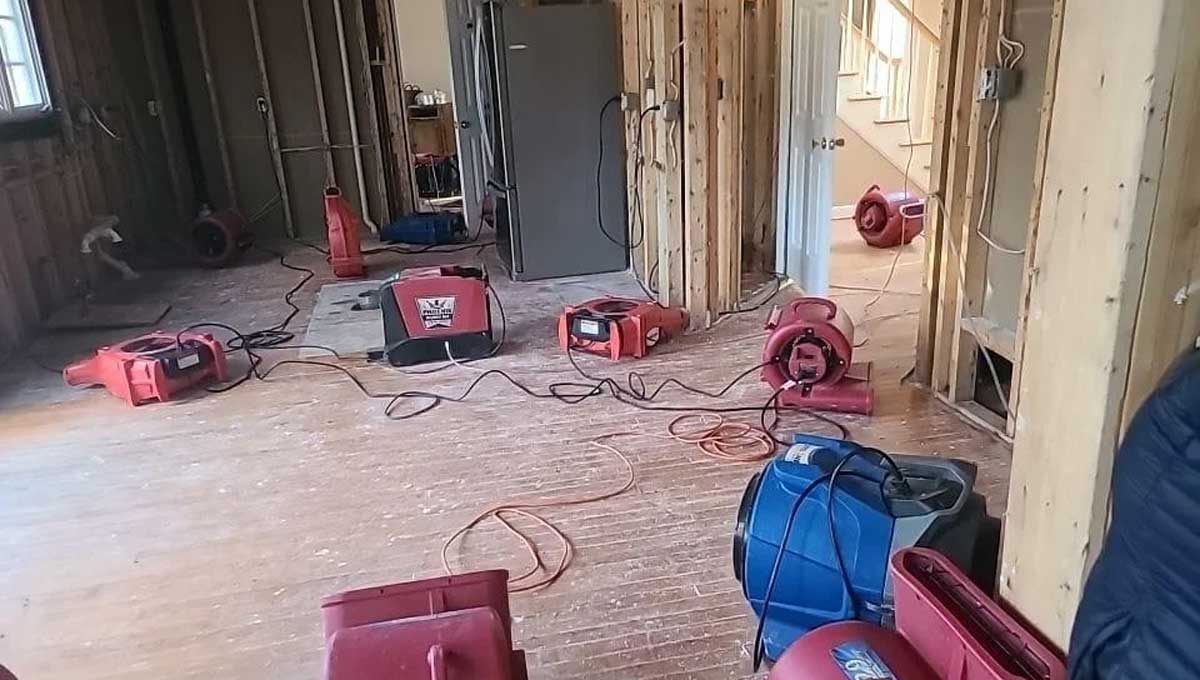
Dehumidifiers and air movers are placed to dry floors, walls, ceilings and framing. We may drill small holes at the bottom of walls or remove baseboards so air can reach the wall cavity. We check readings daily and adjust until every material is dry.
Step 4: Cleaning and Mold Prevention
Affected surfaces are cleaned and treated with antimicrobial products. Materials that can’t be dried or cleaned, like soaked insulation or particleboard, are removed.
Step 5: Repairs
When the structure is dry, we repair drywall, ceilings, flooring, trim and cabinets. For larger losses, our reconstruction team rebuilds the affected rooms.
Common Causes of Water Damage We Repair
- Burst and frozen pipes, especially in exterior walls, attics and crawl spaces during winter cold snaps
- Plumbing leaks under sinks, behind toilets and inside walls
- Appliance failures: washing machine hoses, dishwasher lines, refrigerator ice makers and water heaters
- Toilet, tub and shower overflows
- HVAC condensate leaks and clogged drain lines
- Roof and window leaks after storms
- Slab and foundation leaks
Ceiling Water Damage Repair
A brown stain or sagging spot on the ceiling usually means water is collecting above it, from a bathroom upstairs, an HVAC unit in the attic or a roof leak. If the ceiling is sagging, stay out from under it. We find the source, safely drain and remove wet drywall, dry the joists and insulation, and then patch, texture and paint the ceiling to match.
Emergency Water Damage Repair, Day or Night
Pipes don’t wait for business hours. We answer 24 hours a day, 7 days a week, and we’re typically on site within about 60 minutes in Raleigh. A real person answers the phone and gets a crew moving.
Water Damage in Raleigh: Insurance, Costs and FAQs
Call 24/7
(984) 205-1439
Does Homeowners Insurance Cover Water Damage?
Usually, if the damage was sudden and accidental, like a burst pipe or a failed water heater. Damage from a slow leak over a long period, poor maintenance or rising floodwater from outside is often excluded. Flood coverage needs a separate policy. We work with all insurance companies and can help you document and file your claim. We provide photos, moisture readings and drying records that adjusters ask for.
What Affects the Cost of Water Damage Restoration?
- how large the wet area is and how many rooms or floors it reached
- whether the water was clean, gray (like a dishwasher drain) or contaminated
- how long the water sat before drying started
- which materials got wet, such as hardwood, carpet, drywall, cabinets or insulation
- whether repairs, mold remediation or reconstruction are needed
We give free estimates. Calling early is the simplest way to keep the bill down, because drying is less expensive than rebuilding.
Water Mitigation vs. Water Damage Restoration
Mitigation is the emergency part: stopping the water, extracting it and drying the building so the damage doesn’t spread. Restoration includes mitigation plus the repairs that bring the property back to its pre-loss condition. Some companies only do mitigation. We handle both, which means one point of contact from the first call to the final coat of paint.
Clean, Gray and Black Water
Restoration companies sort water into three categories because it changes what can be kept. Category 1 is clean water from a supply line or faucet. Category 2, or gray water, comes from sources like a dishwasher, washing machine or a toilet bowl without waste and can make people sick. Category 3, or black water, includes sewage and outside floodwater. Clean water also turns into gray or black water if it sits for a few days, which is one more reason to start drying early.
Signs of Hidden Water Damage
- stains or bubbling paint on ceilings and walls
- a musty smell in one room or closet
- floors that feel soft, spongy or uneven
- baseboards that are swollen or pulling away from the wall
- a water bill that is higher than normal with no change in use
If you notice any of these, we can check the area with moisture meters and thermal imaging without opening walls.
Simple Ways to Prevent Water Damage
- replace rubber washing machine hoses with braided steel hoses every few years
- know where your main water shut-off valve is and make sure it turns
- insulate pipes in crawl spaces and exterior walls before winter
- keep gutters clear and downspouts pointed away from the foundation
- have the water heater checked as it gets older, and watch for rust or moisture at the base
Commercial and Residential Water Damage
We work in single-family homes, townhomes, apartments and condos, and in offices, stores and other commercial buildings. Learn more about our residential restoration and commercial water damage repair.
Why Choose Water Damage Pros NC
- Available 24/7 with a fast response across Raleigh and the Triangle
- IICRC-certified, fully licensed and insured technicians
- Mitigation and repairs under one roof
- Insurance documentation for your claim
- Water Damage Pros NC has served the Raleigh area since 2021, led by owners with over a decade of restoration experience, with offices in Raleigh and Greensboro.
Related Services
If water came from outside, see flood damage cleanup. If mold is already growing, see mold remediation. For toilet or sewer line backups, see sewage cleanup.
Water Damage Restoration Near Raleigh
We also provide water damage restoration in Cary, Apex, Durham, Clayton, Holly Springs, Fuquay-Varina, Knightdale, Wake Forest, Rolesville and Youngsville.
Water Damage FAQ
How long does water damage restoration take?
Drying usually takes three to five days for a typical room, longer for large losses or dense materials like hardwood and concrete. Repairs start once moisture readings show everything is dry.
Can wet drywall be saved?
Often yes, if it got wet with clean water and drying starts quickly. Drywall that is soft, crumbling or soaked with contaminated water is cut out and replaced.
Can hardwood floors be saved after water damage?
Sometimes. If the boards are dried quickly with specialized mats and dehumidifiers, many can be saved. Floors that stay wet for days usually cup or buckle and need to be replaced.
Will water damage cause mold?
It can. Mold can start growing on wet materials within 24 to 48 hours. Fast extraction and drying is the best way to prevent it.
Do I need to leave my house during water damage repair?
Most people stay home. If the kitchen or bathrooms are out of service or the water was contaminated, a short stay elsewhere may make sense.
What should I not do after water damage?
Don’t use electrical outlets or appliances in wet areas, don’t use a household vacuum on standing water, and don’t paint over or cover wet materials. Wait until a moisture check confirms the area is dry.
Do you give free estimates?
Yes. Call (984) 205-1439 and we will assess the damage and explain your options.