What Causes a Sewage Backup?
A sewage backup happens when wastewater can’t flow out through the sewer line and comes back up through floor drains, toilets, tubs or basement fixtures. Sewage is Category 3 water under IICRC guidelines, the most contaminated type, so it needs professional cleanup and disinfection.
Most backups come from one of these causes:
- Clogs on your property. Grease, wipes, hair and other items build up in the line between the house and the street. This is sometimes called a sewage overflow, and it usually happens on the property side of the line.
- Tree roots. Roots grow into small cracks in older sewer pipes and catch everything that flows past.
- Collapsed or broken pipes. Older clay or cast iron lines can crack, sag or collapse.
- City sewer problems. A blockage or break in the city main, or a sewer system overloaded by heavy rain, can push sewage back into homes and businesses.
- Septic system failure. A full or failing septic tank can back up into the house.
What to Do Right Away
- Keep people and pets away from the area.
- Stop using water. Don’t flush toilets or run sinks, dishwashers or washing machines.
- Turn off power to the affected area only if you can reach the breaker without touching the water.
- Don’t try to clean it yourself without protective equipment. Sewage carries bacteria and viruses.
- Call (984) 205-1439 for emergency sewage cleanup, and call a plumber if the line itself needs repair.
Our Sewage Cleanup Process
1. Emergency Response and Assessment
We’re typically on site within about 60 minutes. We find where the sewage came from, see how far it spread and make sure the source is stopped before cleanup begins.
2. Safety and Containment
Our technicians wear full protective gear. We seal off the affected area so contamination isn’t tracked into the rest of the house.
3. Sewage Extraction
Standing sewage and wastewater are removed with industrial pumps and extractors.
4. Removing Contaminated Materials
Porous materials that touched sewage, like carpet and pad, the lower part of drywall, insulation and some cabinet bases, usually can’t be made safe and are removed and disposed of properly.
5. Cleaning and Disinfection
Every remaining surface in the affected area is cleaned and disinfected with products made for sewage cleanup.
6. Drying and Dehumidification
Air movers and dehumidifiers dry the framing and subfloor. We check moisture readings until the structure is dry.
7. Odor Control and Air Cleaning
Air scrubbers remove airborne particles and odors during and after the cleanup.
8. Repairs and Restoration
Once the area is clean and dry, we replace drywall, flooring, trim and cabinets so the space is ready to use again.
Toilet Overflow Cleanup
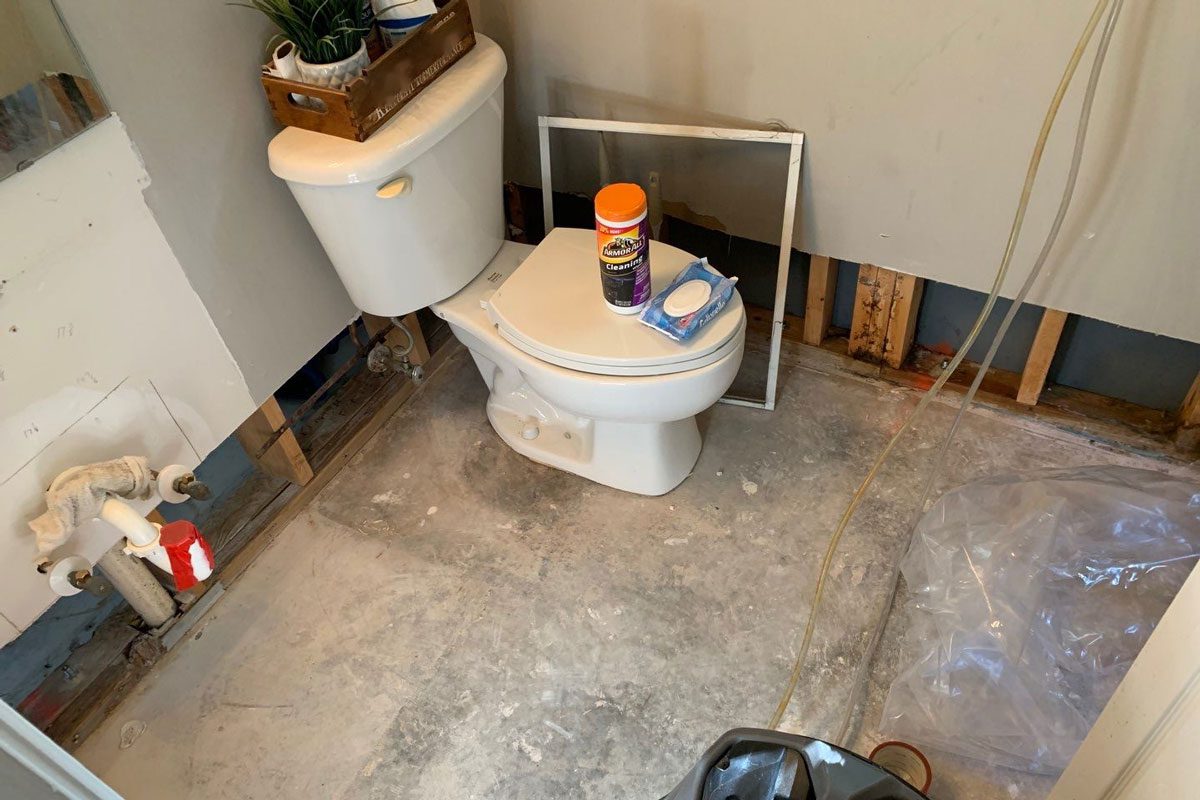
A toilet overflow can be clean water, gray water or sewage, depending on what was in the bowl. An overflow from an upstairs bathroom often soaks through the floor and into the ceiling below. We clean and disinfect the bathroom, dry the subfloor and joists, and repair the ceiling underneath.
Basement and Crawl Space Sewage Cleanup
Floor drains in basements are often the first place sewage comes up. Under the house, a broken drain line can leak into the crawl space for weeks before anyone notices the smell. We pump out the sewage, remove contaminated insulation and soil covering where needed, disinfect and dry the space.
Warning Signs of a Sewer Line Problem
- several drains slowing down at the same time
- gurgling sounds from toilets or drains when water runs elsewhere
- water coming up in a tub or floor drain when the washer drains
- sewage odor in the yard, basement or crawl space
- soggy or unusually green patches of lawn over the sewer line
If you notice these signs, have a plumber check the line before it turns into a backup.
How to Help Prevent Sewage Backups
- don’t flush wipes, paper towels or feminine products, even ones labeled flushable
- pour cooking grease in the trash, not the sink
- have older sewer lines inspected with a camera, especially if large trees are nearby
- ask a plumber about a backwater valve if your basement drains have backed up before
- keep septic tanks pumped on the schedule your septic service recommends
Commercial Sewage Cleanup
Restaurants, offices, apartment buildings and stores face the same risks, often with more people affected. We contain the area so other parts of the building can stay open where safe, and we work after hours when needed. See our commercial restoration page for more.
Sewage Cleanup Services
- emergency sewage backup cleanup
- toilet overflow cleanup
- basement floor drain backups
- crawl space sewage cleanup
- septic backup cleanup
- removal of contaminated drywall, carpet and flooring
- disinfection and odor removal
- drying and dehumidification
- repairs and reconstruction

Sewage Cleanup in Raleigh: Insurance, Costs and FAQs

Call 24/7
(984) 205-1439
Does Insurance Cover Sewage Backup Cleanup?
It depends on your policy. Many homeowners policies only cover sewer or drain backups if you added a specific endorsement, so check with your insurance agent. We work with all insurance companies and can help you document and file your claim.
What Affects the Cost of Sewage Cleanup?
- the size of the affected area
- how much flooring, drywall and other material has to be removed
- whether the sewage reached a crawl space or a lower level
- how long it sat before cleanup
- the repairs needed afterward
We give free estimates, and we can work with you and your plumber to coordinate the line repair and the cleanup.
Sewage Overflow vs. Sewage Backup
The two terms are often used the same way, but there is a difference. An overflow usually starts on your property, from a soft clog like grease or wipes in your own line. A backup usually comes from the city side, caused by tree roots, a collapsed or broken main, or a sewer plant that is overloaded during heavy rain. The cleanup is the same, but knowing the cause helps you decide whether to call a plumber, the city or both.
Why Sewage Is Dangerous
Raw sewage can carry bacteria, viruses and parasites that cause stomach illness, skin infections and other problems. Children, older adults and people with weakened immune systems are especially at risk. That is why contaminated materials are removed and everything else is disinfected rather than just wiped down.
Here’s What to Expect When You Call Us
- 24/7 emergency service. We’re available day or night.
- Fast response. We’re typically on site within about 60 minutes to stop further damage.
- IICRC-certified, fully licensed and insured technicians trained in sewage cleanup.
- Cleanup and repairs handled by one team, from extraction to rebuild.
- Insurance assistance. We work with all insurance companies and can help you document and file your claim.
- Water Damage Pros NC has served the Raleigh area since 2021, led by owners with over a decade of restoration experience, with offices in Raleigh and Greensboro.
Sewage Cleanup Near Raleigh
Outside Raleigh, we also provide sewage cleanup in Cary, Clayton, Holly Springs, Fuquay-Varina, Wake Forest, Rolesville and Youngsville. If floodwater from outside entered the home, see our flood damage cleanup page. For clean water leaks, see water damage restoration.
Sewage Cleanup FAQ
Can I clean up a sewage backup myself?
A very small backup on a hard floor can sometimes be handled with gloves, boots and disinfectant. Anything that reached carpet, drywall or a large area should be cleaned by professionals because of the health risk.
Can carpet be saved after a sewage backup?
No. Carpet and pad that touched sewage are removed and replaced. Hard flooring like tile can often be cleaned and disinfected.
How long does sewage cleanup take?
Extraction and removal usually take a day. Drying takes a few more days, and repairs follow after that.
Who is responsible for a sewage backup, me or the city?
If the blockage is in the line on your property, it is usually the owner’s responsibility. If it is in the city main, contact the City of Raleigh Public Utilities Department. A plumber can scope the line to find out where the problem is.
Is it safe to stay in the house after a sewage backup?
Stay out of the affected area until it has been cleaned and disinfected. If the backup affected living areas or the only bathroom, staying elsewhere for a short time may be safer.
Do you handle septic tank backups?
Yes. We clean up the sewage inside the home after a septic backup. The tank itself needs to be pumped or repaired by a septic company, and we can work alongside them.
Will the sewage smell go away?
Yes, once contaminated materials are removed and the area is cleaned, disinfected and dried. Air scrubbers help clear the remaining odor.